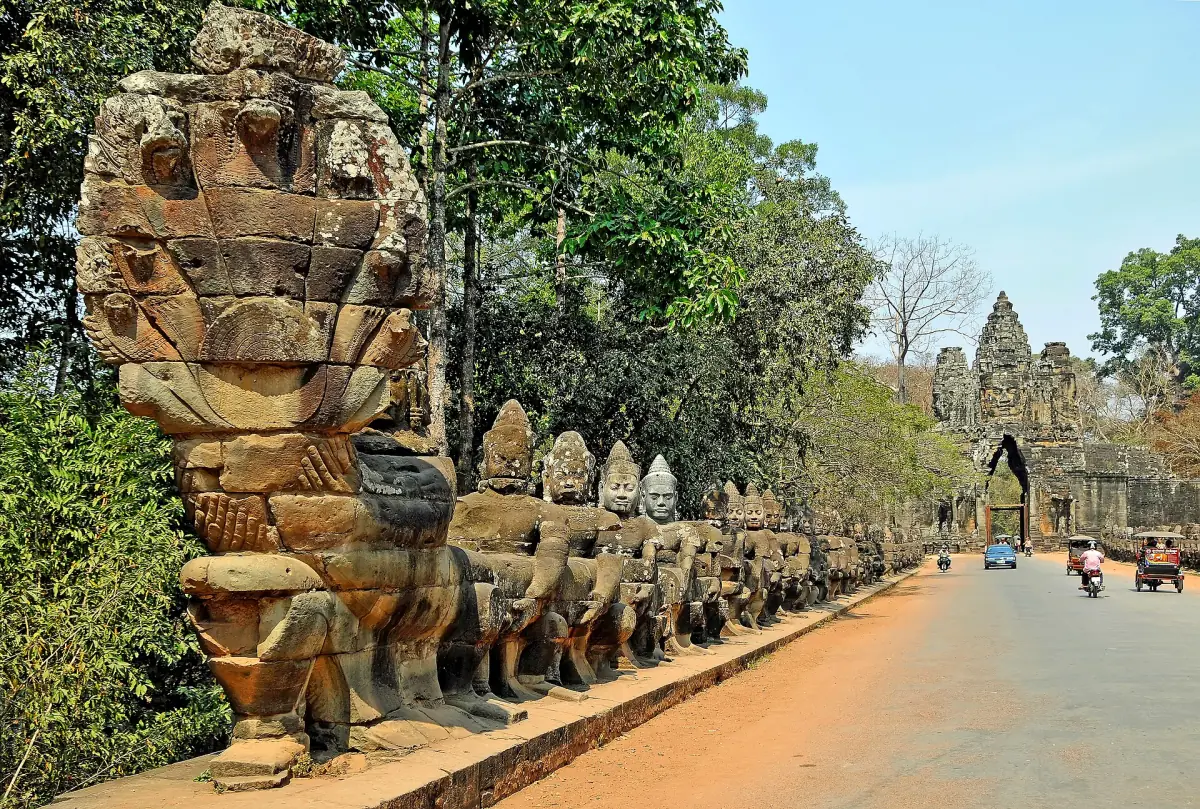
The Churning of the Ocean of Milk at the gates
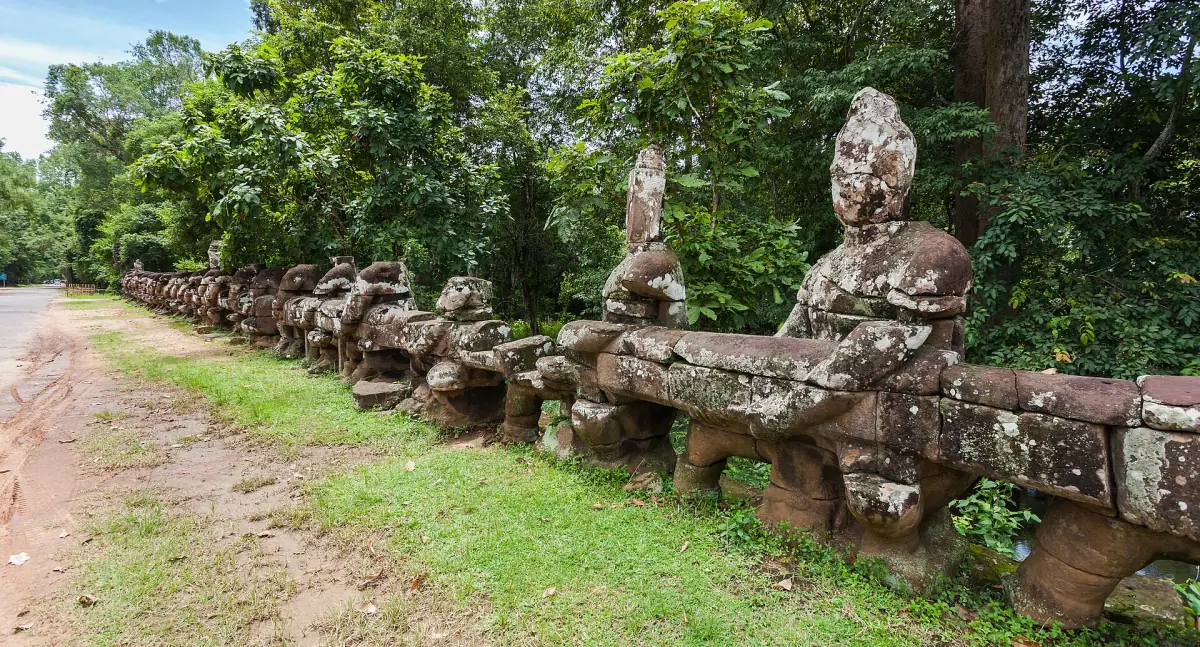
Each causeway to a gate of Angkor Thom is lined with stone figures. They hold a long serpent between them, and they are read as the Churning of the Ocean of Milk. On one side stand the devas, on the other the asuras. Together they pull the serpent as they struggle over amrita, the drink of immortality.
The causeways are part of the same visit as the gates themselves, and you need the Angkor Pass to enter. See the five city gates for the layout, the Angkor Pass prices for tickets, or Angkor Thom tours by bike and tuk-tuk if you want a guide who explains the figures as you pass.
Our pick: through the south gate with a guide
A small-group day that enters Angkor Thom through the south gate, where the rows of gods and demons line the approach.
Hand-picked tours, booked through GetYourGuide. Prices are indicative starting prices in US dollars (as of October 2026). Tap a tour for live availability and the current price in your currency.
Angkor Thom tours past the gate causeways
Guided temple tours around Angkor Thom, with live prices and availability.
The myth in short
A story from Hindu mythology, told in stone.
The gods and the demons want the drink of immortality. To get it, they churn the ocean of milk. Mount Mandara serves as the churning stick. The serpent Vasuki is the rope, and the devas and asuras each hold one end. Vishnu, in the form of the turtle Kurma, supports the mountain from below.
This is a story from Hindu mythology, not a scientific or historical claim. At Angkor Thom it gives the gates their meaning: you cross the moat on a causeway that is itself the churning rope.
| Part of the myth | Who or what it is |
|---|---|
| Mandara | The mountain used as the churning stick |
| Vasuki | The serpent that serves as the rope |
| Kurma | Vishnu as a turtle, supporting the mountain |
| Devas and asuras | The two sides who pull, 54 each in the scheme |
| Amrita | The drink of immortality they struggle over |
The figures at the gates are a different work from the relief of the same myth at Angkor Wat. If you want that one, see Angkor Wat. This page covers the sculptures on the Angkor Thom causeways.
Naga: the serpent along the causeway
The rope is a long stone balustrade.
The serpent held by the devas and asuras forms the long stone balustrade at the edge of the causeway.
Some of the heads you see are copies, and some originals are kept in storage. Do not assume that every head is original, and do not assume that every head is a copy. Do not climb on the figures or on the balustrades.
Garuda: not every serpent figure
Two different kinds of figures.
Garudas are part of the imagery of the Elephant Terrace, and garudas also appear on naga balustrades. Not every serpent figure is a garuda, though. At the gates, the main subject is the churning scene. For garudas in stone, the better place to look is the Terrace of the Elephants.
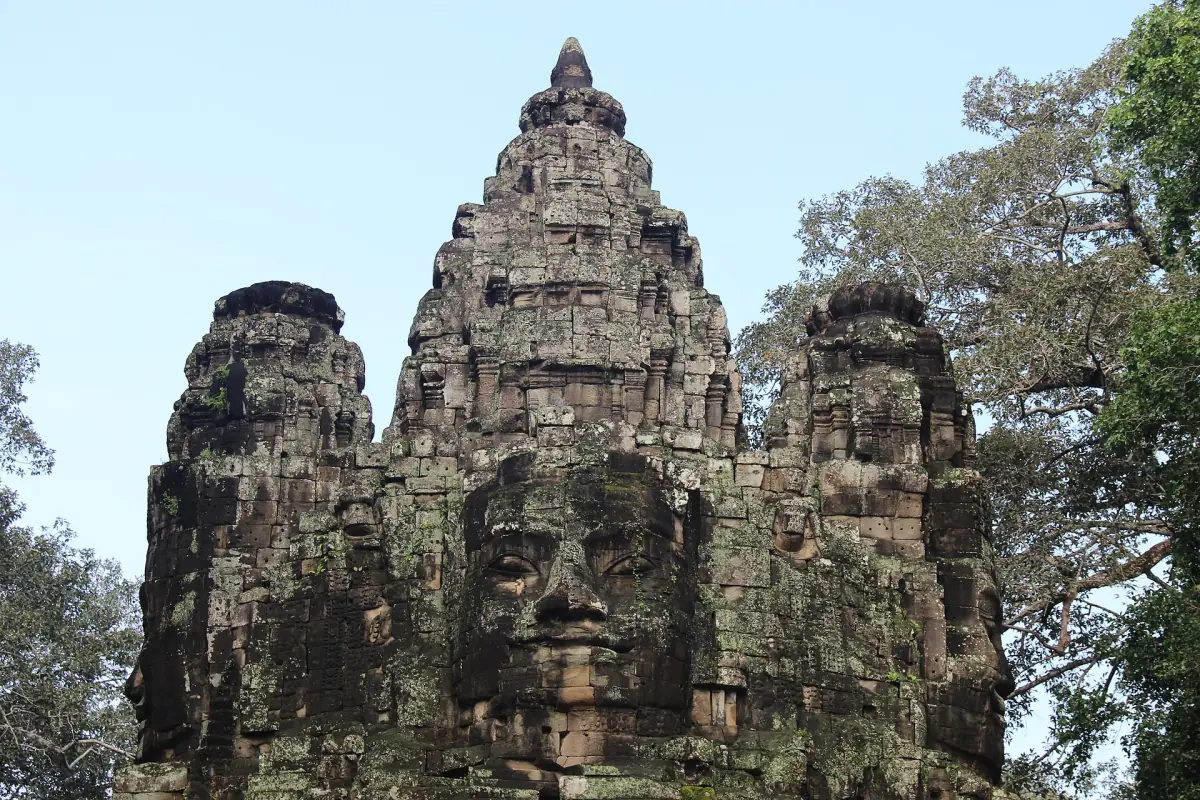
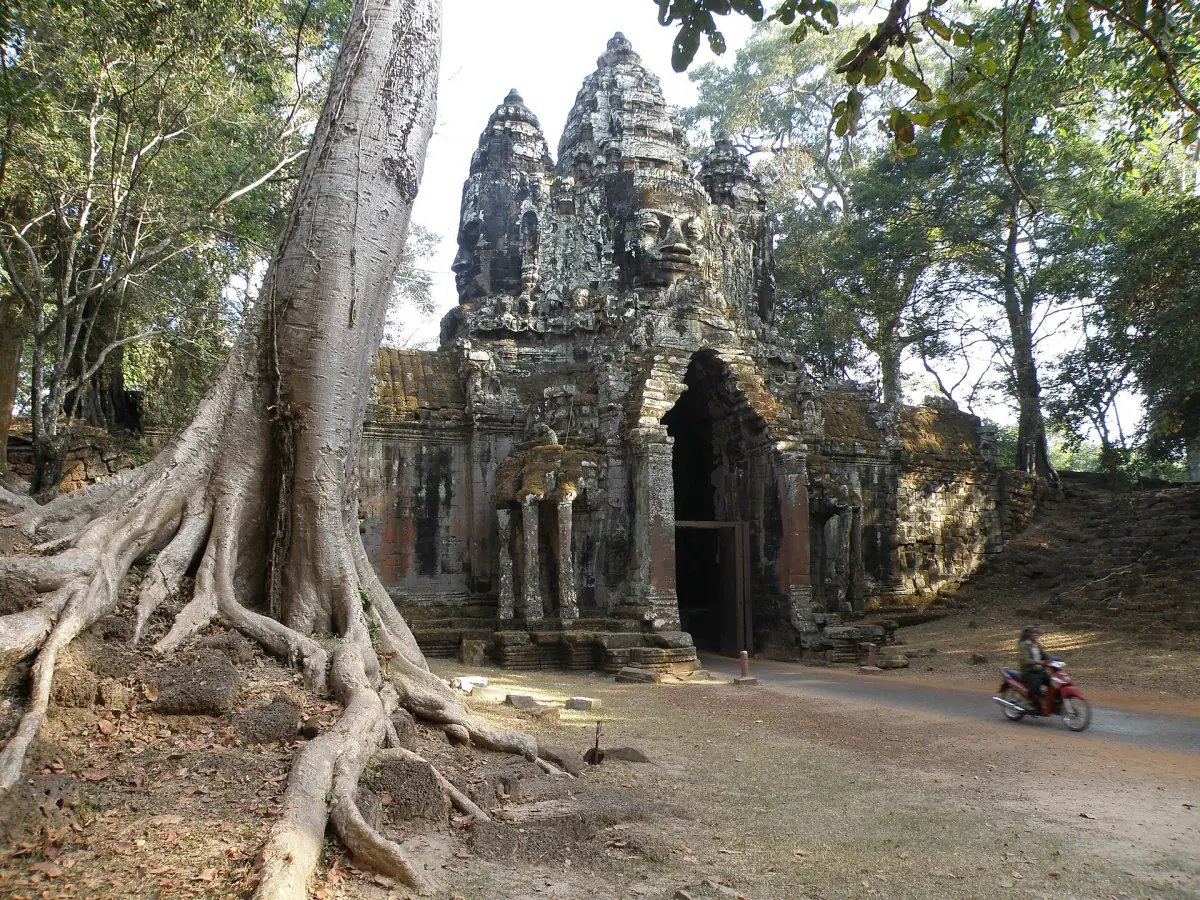
Also look up at the gate towers. Each tower carries four faces, and each gate is also decorated with a three-headed celestial elephant. The causeway, the faces and the elephant belong together as one gate design.
The Victory Gate lies on the axis of the palace and terrace area. The other east gate is called the Gate of the Dead. The name alone does not show that it was used only for funerals.
Restoration and what you see today
Old photos do not always match the present state.
In 2026 the heads of two deva statues were set back in place at the Victory Gate. That does not mean every figure has been restored, and it does not tell you which parts are original, added or copied. A photo from a few years ago may not show what you see now.
Do not read the 54 and 54 as a count of what survives at each gate. It is the plan of the scheme.
How to see the figures
Where to stop and what to bring.
South Gate
The causeway to the South Gate carries rows of stone devas and asuras on both sides.
Victory Gate
The gate lies on the axis of the palace and terrace area, and its causeway is lined with the figures of the churning scene.
North Gate
The North Gate is the gate you pass on the way to Preah Khan.
East gates
The east side has two gates: the Victory Gate and the Gate of the Dead.
Cycling and tuk-tuk
A bicycle is a good way to explore stretches of the city wall. Wet stone is slippery and storms are a risk, so do not park under large trees.
Cover your shoulders and knees at temples. For the season, see the best time to visit Angkor Thom.
More at Angkor Thom
Places on the same route.
The five city gates
South Gate, Victory Gate and the others, with the Angkor Thom walls.
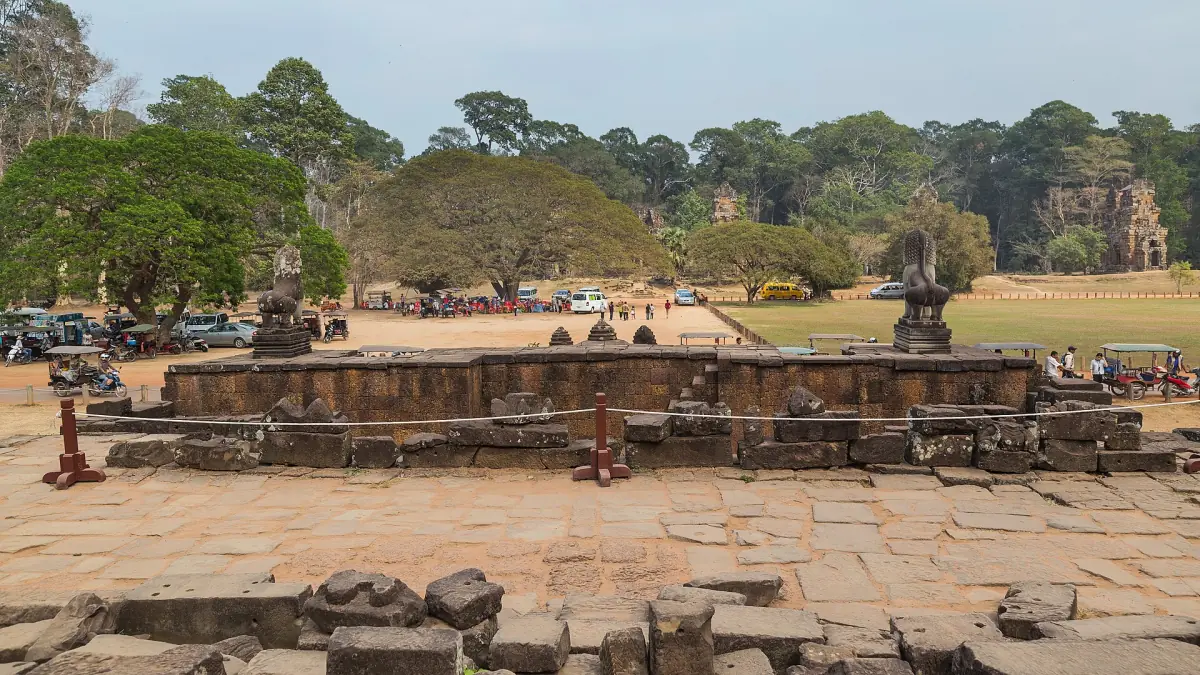
Terrace of the Elephants
Elephants, lions and garudas carved along the royal terrace.
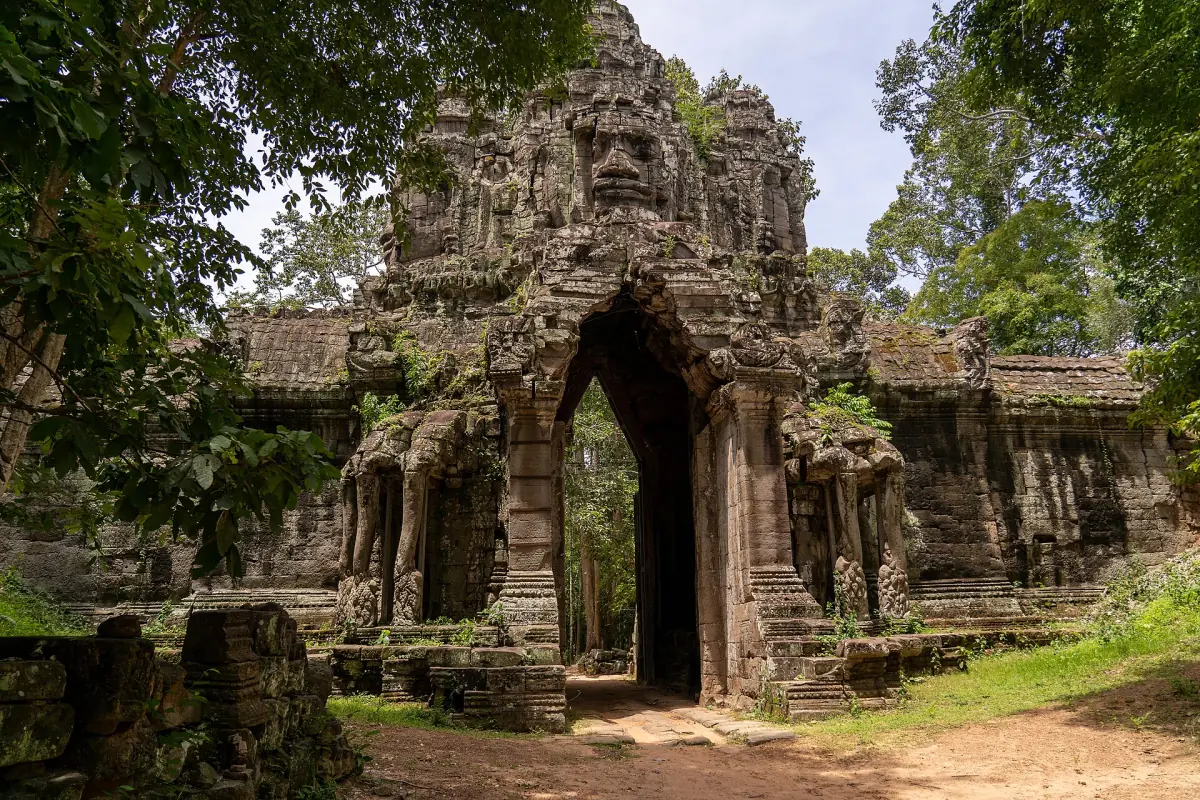
Jayavarman VII and Angkor Thom
The king who built the city and its great gates.
The Bayon in the middle of the city has its own guide at Bayon Temple.
Churning of the Ocean of Milk: frequently asked questions
What is the Churning of the Ocean of Milk?
It is a story from Hindu mythology. The devas and asuras pull a serpent around Mount Mandara to churn the ocean and win the drink of immortality, amrita. Vishnu as the turtle Kurma supports the mountain.
How many figures are there?
The scheme names 54 devas and 54 asuras, 108 figures together. That is the design, not a count of what survives at each gate.
Are the heads original?
Some heads are copies and some originals are kept in storage. Two deva heads were set back at the Victory Gate in 2026. Do not assume all are original or all are copies.
Can I climb on the figures?
No. Do not climb on the figures or on the balustrades.
Do all five gates have the figures?
Each causeway to a gate of Angkor Thom is lined with stone figures, so you can see the churning scene at every gate.