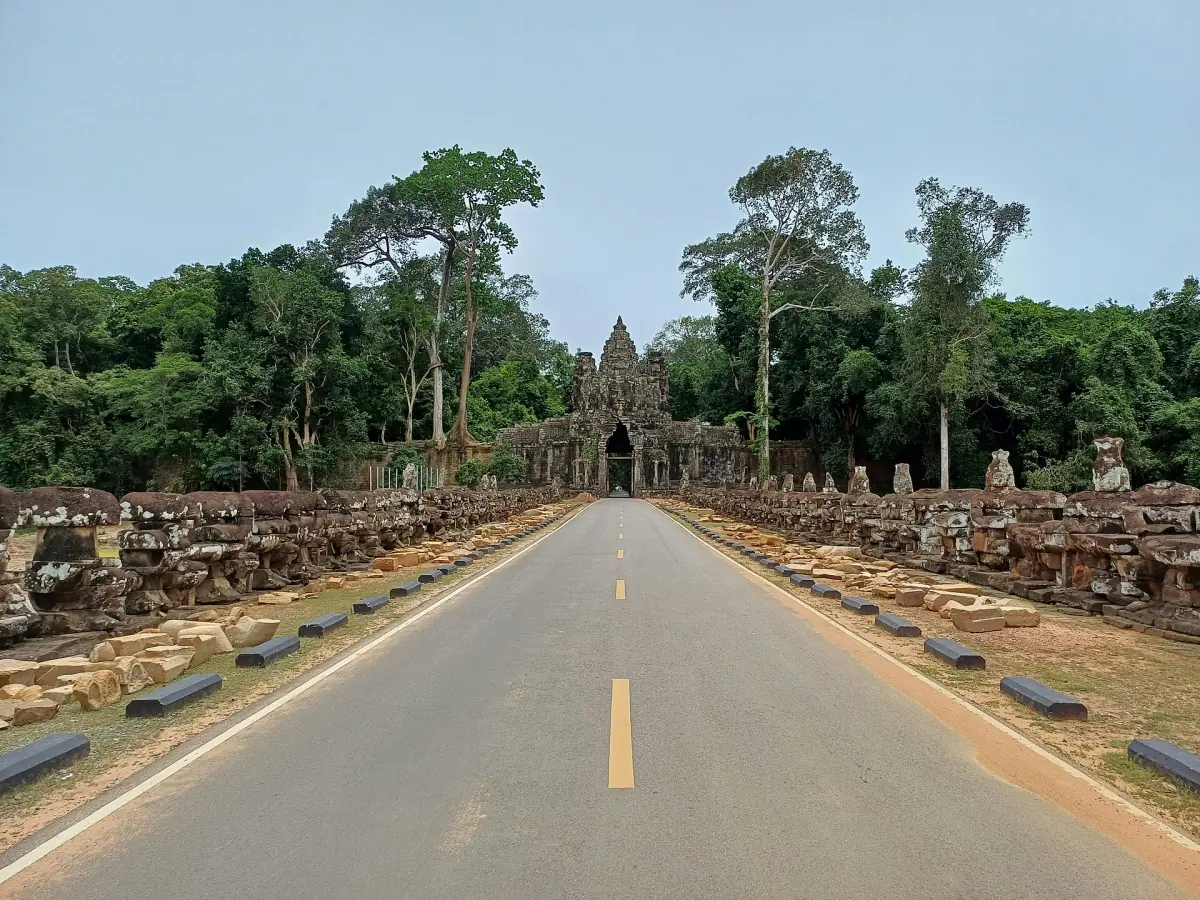
Angkor Thom and the king who built it
Angkor Thom means "Great City". It is a walled royal city of about 900 hectares (9 km²), founded as a capital under Jayavarman VII at the end of the 12th century. A moat and a laterite wall of about 12 km enclose five gates, a palace district and several temples, with the Bayon at the centre.
Jayavarman VII is tied to the late Angkorian building boom and to the Bayon, the Mahayana Buddhist state temple. The city is not all his work, though. The Baphuon dates from the middle of the 11th century and Phimeanakas from the late 10th or early 11th century, so the new capital grew around monuments that were already standing. If you would rather hear the story on the spot, a guide helps: see our Angkor Thom tours by bike, tuk-tuk and guide.
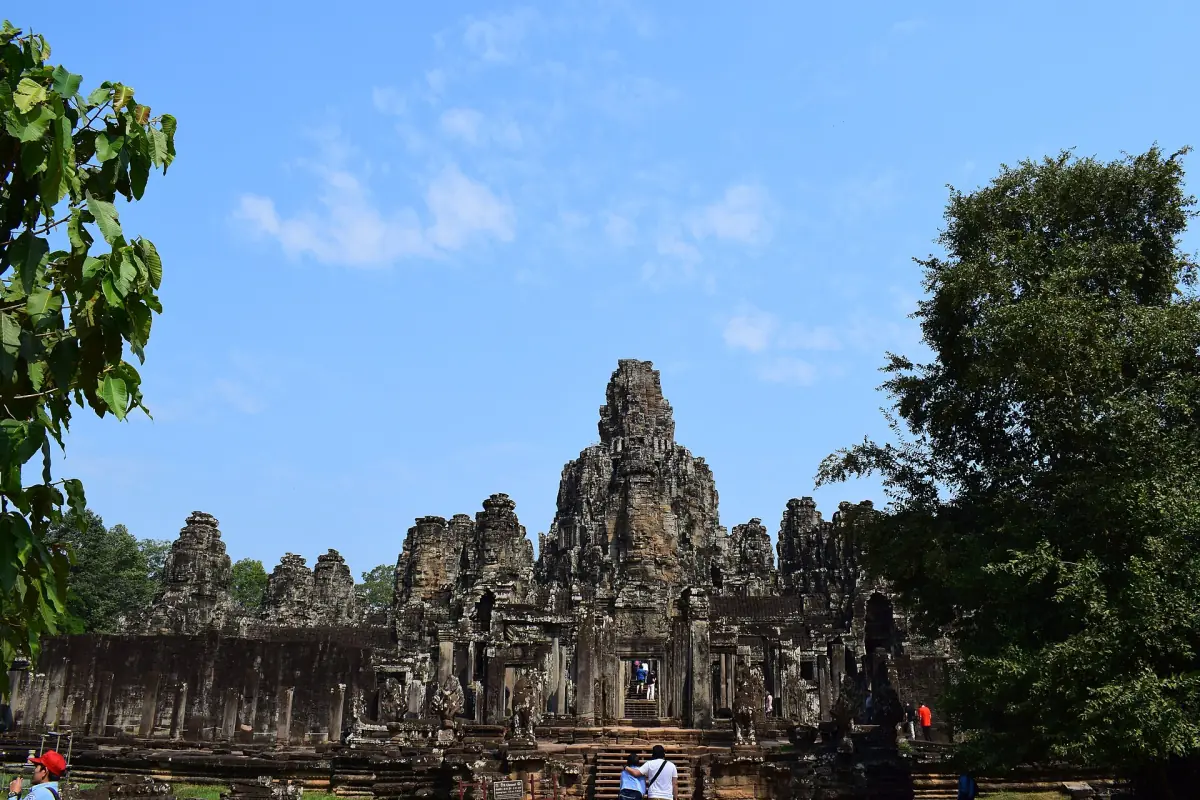
The Khmer Empire in the 1170s and 1180s
The key dates, from the fall of Angkor to the end of the reign.
1177: Angkor is taken
A Cham king conquers Angkor with Khmer support. The fighting that follows draws in the future Jayavarman VII. Conflicts among Khmer factions are part of the picture, so the period is not a simple contest between two peoples.
1181 or 1182: a new king
Jayavarman VII takes the throne. Both 1181 and 1182 are named, so you will meet both years.
1186: Ta Prohm
A temple is founded for the king's mother, shown as the goddess Prajnaparamita. It lies outside the city and has its own guide: Ta Prohm.
1191: Preah Khan
A temple is founded on the site of a victory over the Cham and dedicated to the king's father. It is reached through the north gate of Angkor Thom. More on our Preah Khan page.
Around 1210: the end of the reign
The reign is usually placed as ending around this year. Later kings changed some of what he built, which is why the monuments look different today.
Our pick: a guided morning in Jayavarman VII's city
A small-group tour with an English-speaking guide through Angkor Thom and the Bayon, the city Jayavarman VII founded.
Hand-picked tours, booked through GetYourGuide. Prices are indicative starting prices in US dollars (as of October 2026). Tap a tour for live availability and the current price in your currency.
Angkor Thom tours with a guide
Guided visits that bring the walled city and the building program of Jayavarman VII to life, with live prices and availability.
What Jayavarman VII built
A building program rather than a single monument.
The Bayon
The state temple at the centre of the city, Mahayana Buddhist when it was founded. Later Hindu and Theravada Buddhist kings altered it, so today's religious meaning is not always the same as the original. Its faces, reliefs and restoration have their own guide at Bayon Temple.
Angkor Thom itself
The city is a project of the late 12th century: moat, wall, gates and the causeways with their rows of stone figures. The five city gates are the easiest part to visit.
Preah Khan and Neak Pean
Preah Khan and the island shrine of Neak Pean, in the reservoir linked to it, both belong to his reign. Neak Pean is a Buddhist foundation of the late 12th century.
Hospitals and rest houses
Inscriptions credit him with 102 hospitals and 121 rest houses along the road network. These are figures for the whole kingdom and his whole reign, not a list of places you can visit.
Reading Angkor Thom's history on the ground
Four stops that show different layers of the city.
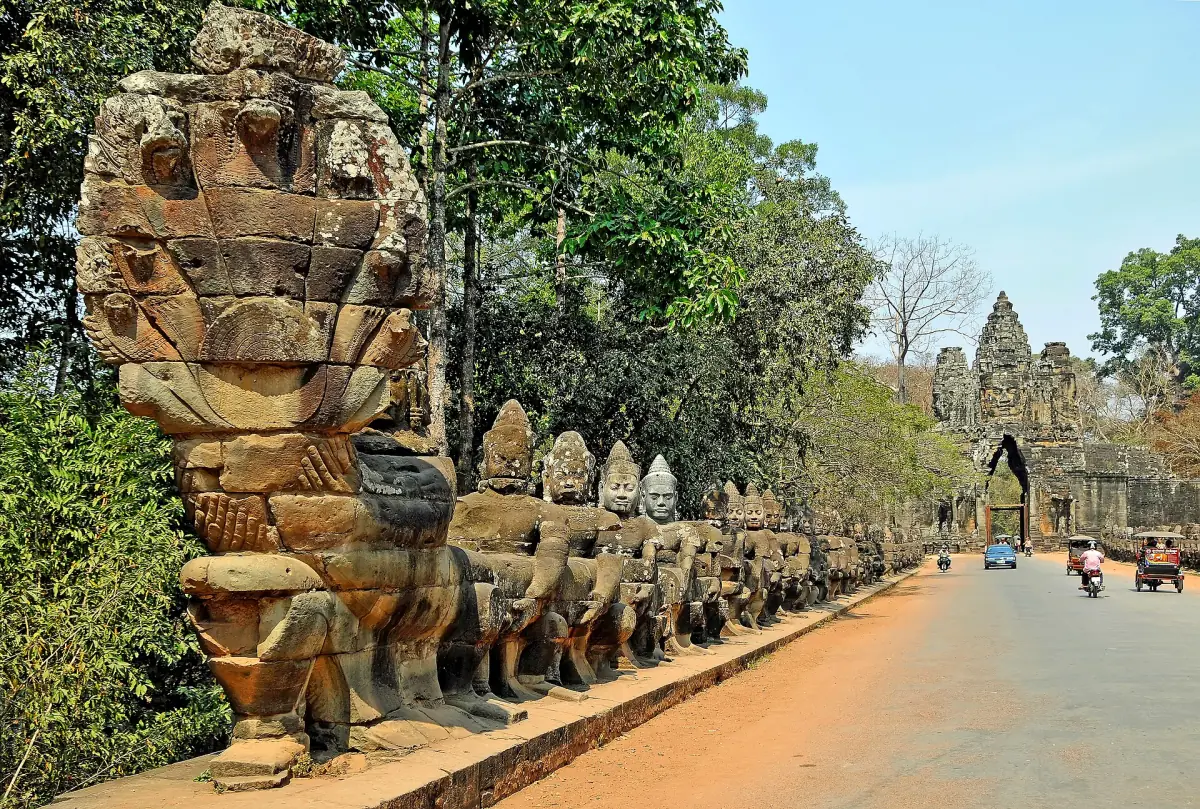
The city gates
Face towers and causeways at the entrances of the city.
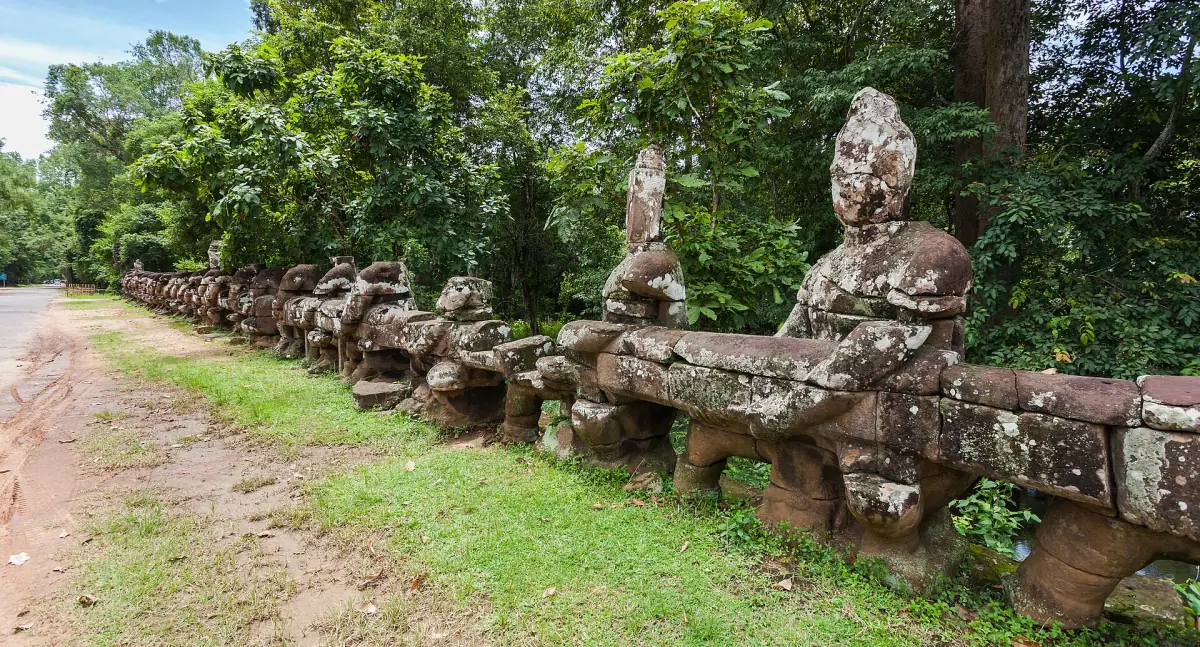
Churning of the Ocean of Milk
Why rows of stone figures line the causeways.
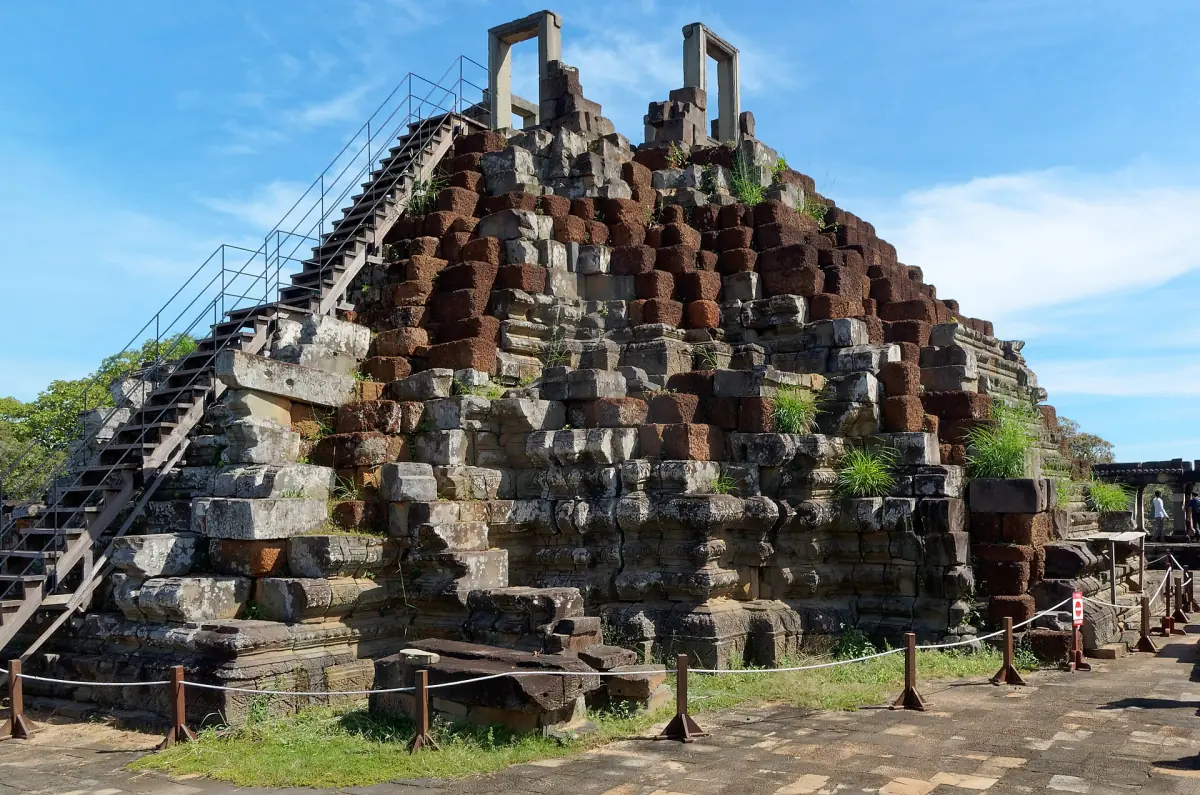
The Baphuon
A temple older than the city, rebuilt between 1995 and 2011.
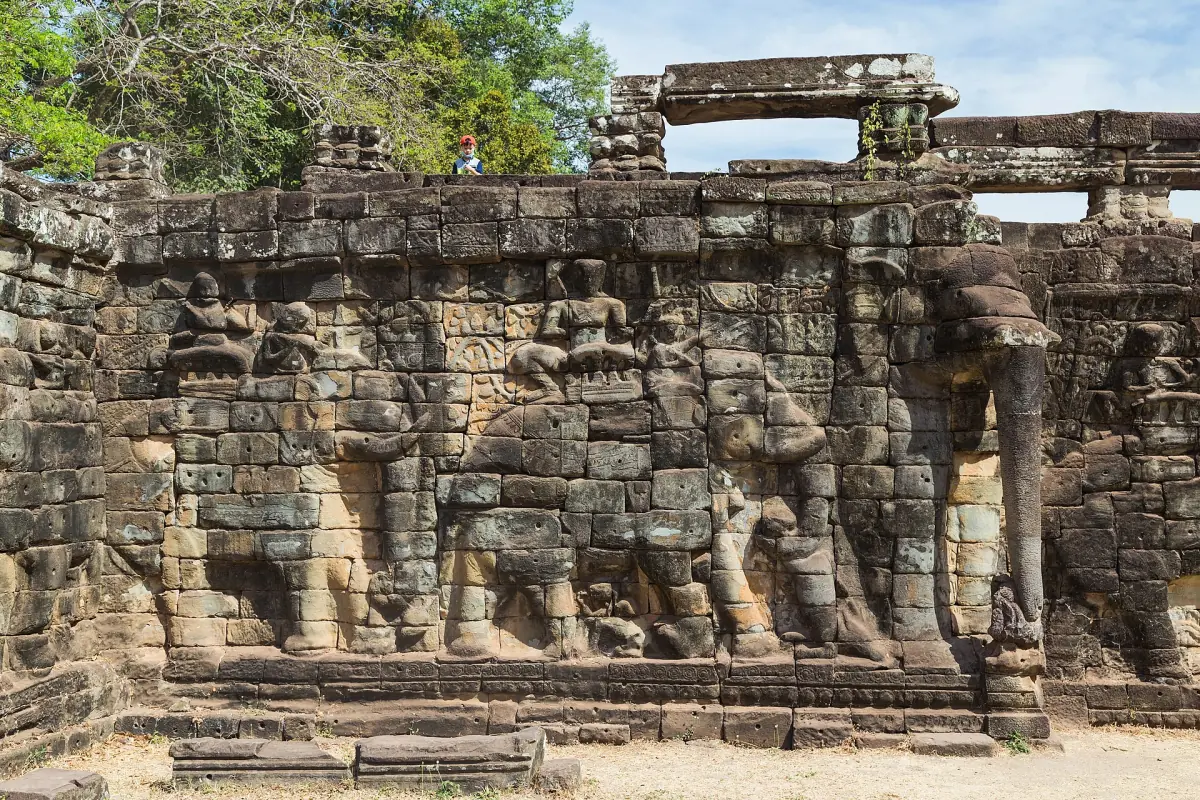
Terrace of the Elephants
A platform for royal receptions and public ceremonies.
The Baphuon is a good example of how layered the site is: it predates the city, and its reconstruction was a long project that ran from 1995 to 2011 and ended with an inauguration on 3 July 2011. All of these places are covered by the Angkor Pass, which costs $37 for 1 day, $62 for 3 days and $72 for 7 days in 2026. Details on the Angkor Pass page.
Jayavarman VII and Angkor Thom: frequently asked questions
What does Angkor Thom mean?
It means "Great City". The walled royal city covers about 900 hectares.
When was Angkor Thom built?
The city was founded as a capital under Jayavarman VII at the end of the 12th century. Some monuments inside it are older: the Baphuon is from the middle of the 11th century and Phimeanakas from the late 10th or early 11th century.
Who was Jayavarman VII?
A Khmer king linked to the late Angkorian building program: the Bayon as state temple, Preah Khan, Ta Prohm and a network of hospitals and rest houses. He is usually dated from 1181 or 1182 to about 1210.
Do I need a separate ticket for Angkor Thom?
No. The Angkor Pass covers the temples in the park, including Angkor Thom. In 2026 it costs $37 for 1 day, $62 for 3 days (valid within 7 days) and $72 for 7 days (valid within 30 days). Children under 12 enter free.
Can I see all of Jayavarman VII's work in one day?
Not realistically. Angkor Thom alone is a sizeable visit, and Preah Khan, Neak Pean and Ta Prohm lie outside the walls. A 3-day pass gives you room to spread them out.
Who built the Baphuon?
Udayadityavarman II built it in the middle of the 11th century as a state temple, first dedicated to Shiva. That is long before the walled city of Jayavarman VII.