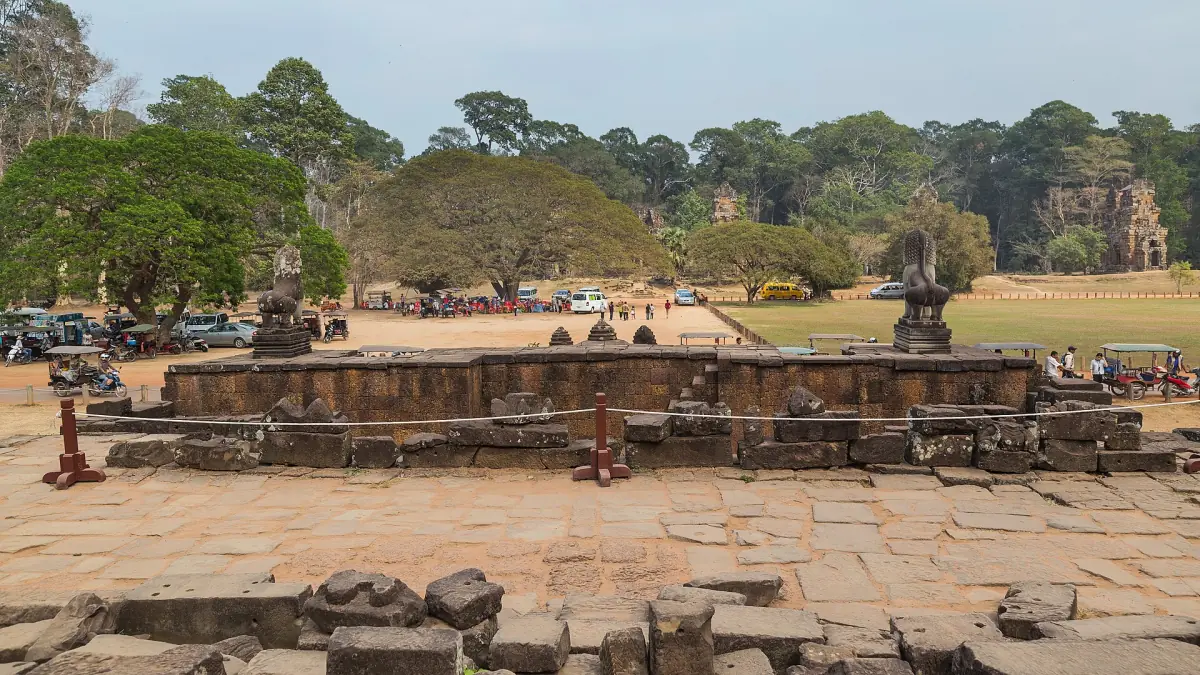
The Terrace of the Elephants
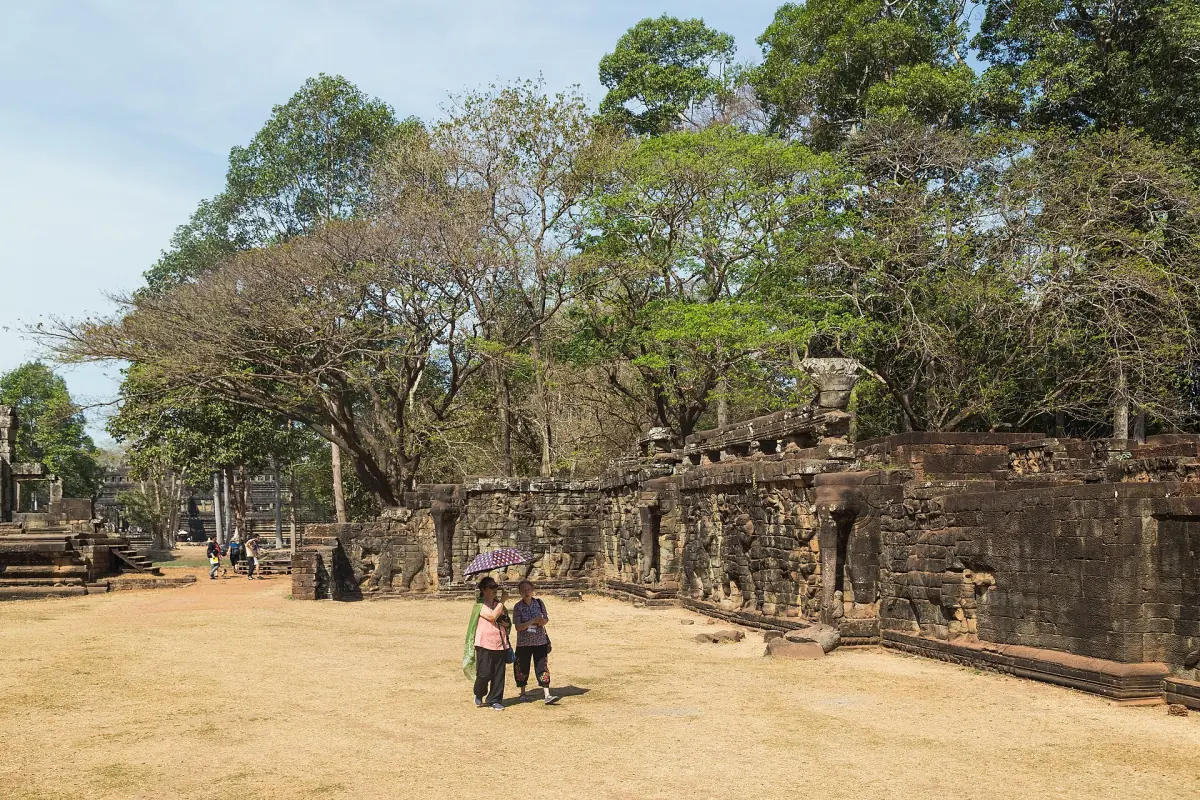
The Terrace of the Elephants is a long stone platform beside an open parade ground in the former royal center of Angkor Thom. It served for royal receptions and public ceremonies. What remains today are the stone platforms and reliefs. The wooden pavilions that once stood on top are gone.
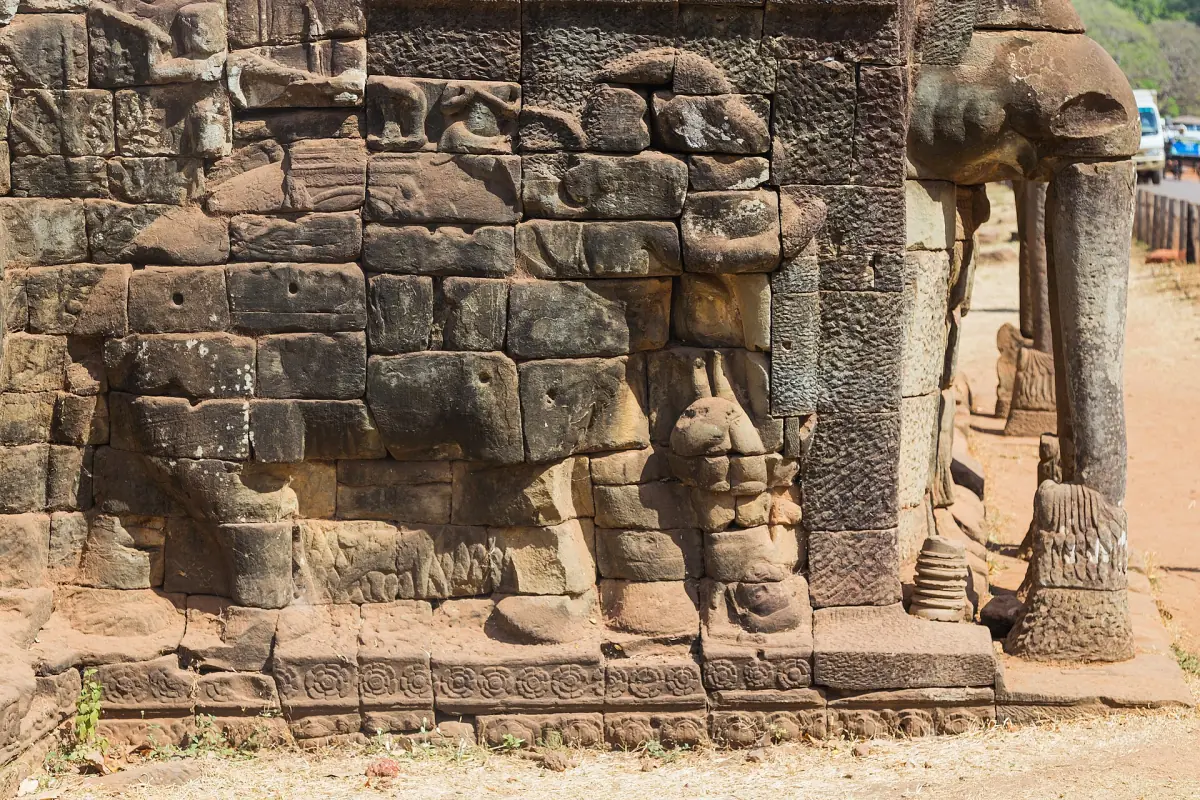
The wall is carved with elephants, lions and garudas. The terrace is roughly 300 to 350 m long. You need the Angkor Pass to visit, and the terrace fits naturally into a day with the Angkor Thom tours by bike and tuk-tuk. For prices, see the Angkor Pass page.
Our pick: the terraces by bike
A full-day ride that passes the Bayon and the Terrace of the Elephants inside Angkor Thom.
Hand-picked tours, booked through GetYourGuide. Prices are indicative starting prices in US dollars (as of October 2026). Tap a tour for live availability and the current price in your currency.
Angkor Thom tours with the royal terraces
Guided temple tours that include Angkor Thom, with live prices and availability.
What the carvings show
Elephants, lions and garudas along the wall.
Look for the long frieze of elephants along the wall. Lions and garudas belong to the same carved scheme. Walk the full length of the wall rather than looking at one section.
The terrace and the open ground in front of it were the setting for public ceremonies. Do not expect the original wooden pavilions on top. Only the stone platforms and reliefs remain.
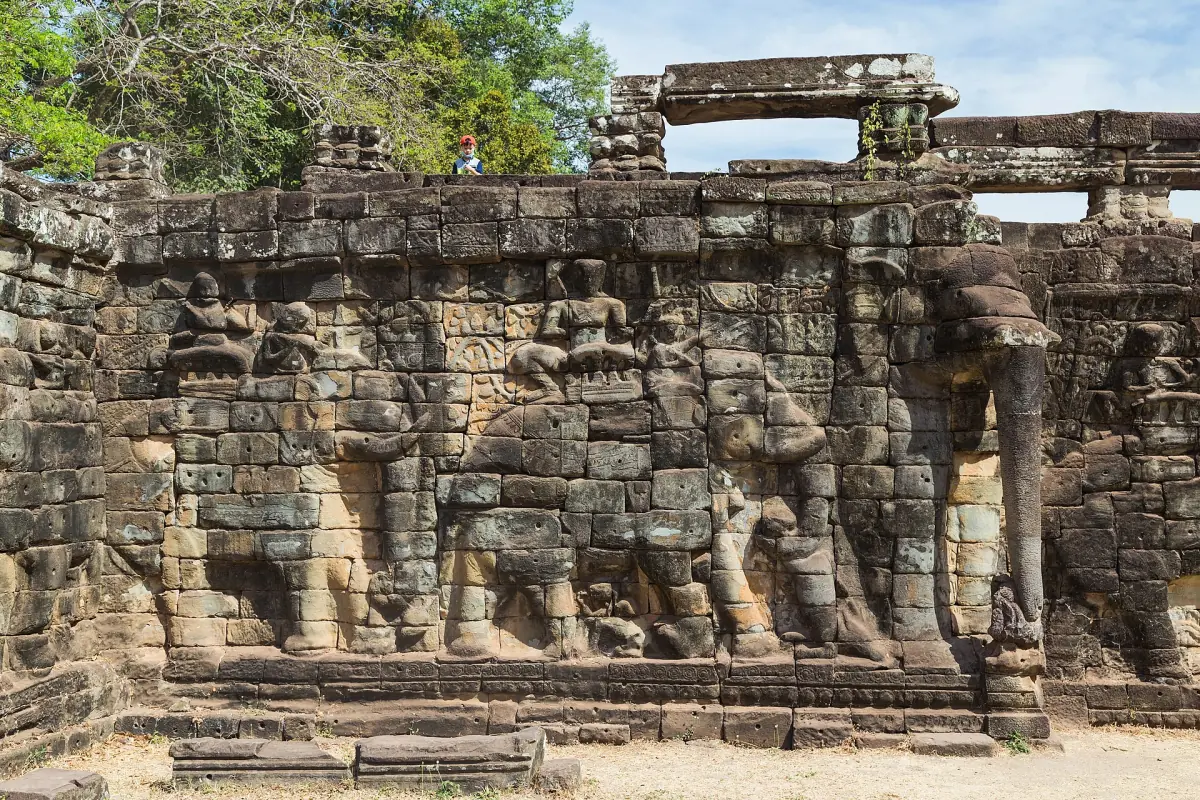
Elephant rides in the temple park were announced to end by early 2020, so there is no ride to book here. The elephants you see on the terrace are carved in stone.
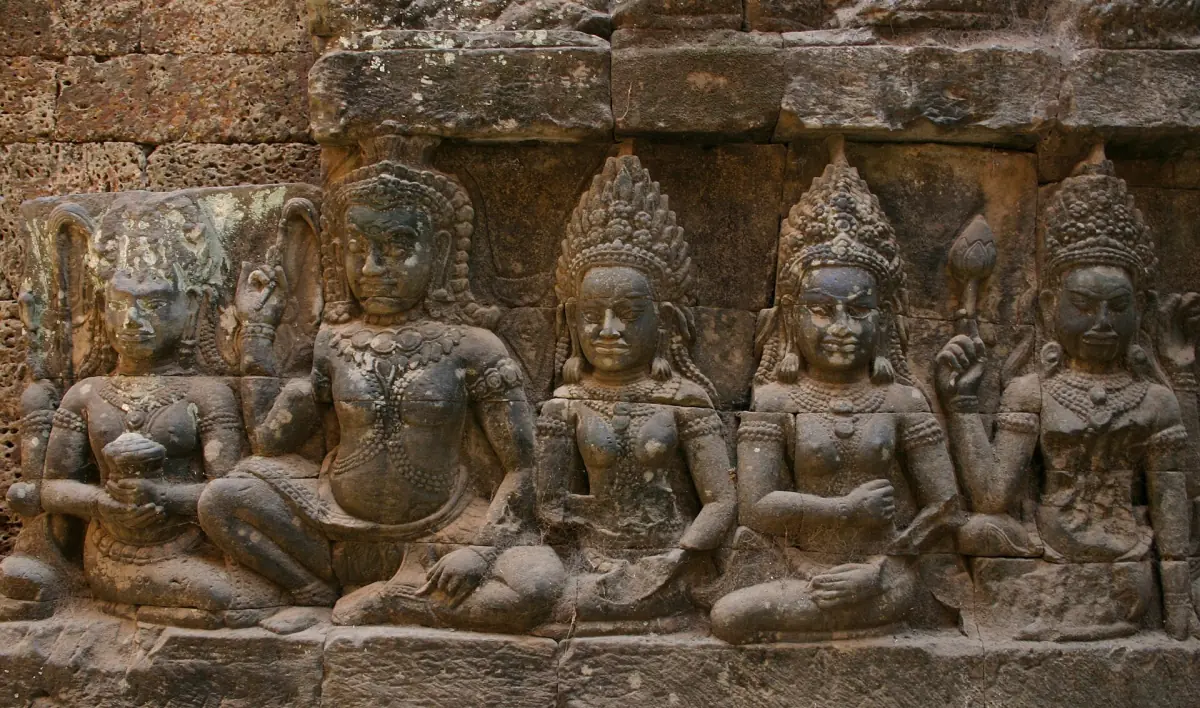
Terrace of the Leper King
The smaller terrace to the north.
The Terrace of the Leper King lies north of the Elephant Terrace. A statue stands on top. It is a replica, and the original is in the National Museum in Phnom Penh. The figure is explained as Yama, the god of death and judge of souls.
The name "Leper King" is a traditional one. It is not evidence that a king had leprosy. One idea links the terrace with royal funerals, but this is only an assumption, and a cremation site is not proven. Look at the carved walls on the terrace, and compare them with the main terrace nearby.
Take your time on this smaller terrace, because it is easy to rush past.
Across the square: Prasat Suor Prat and the Kleangs
Two groups of buildings that most people walk past.
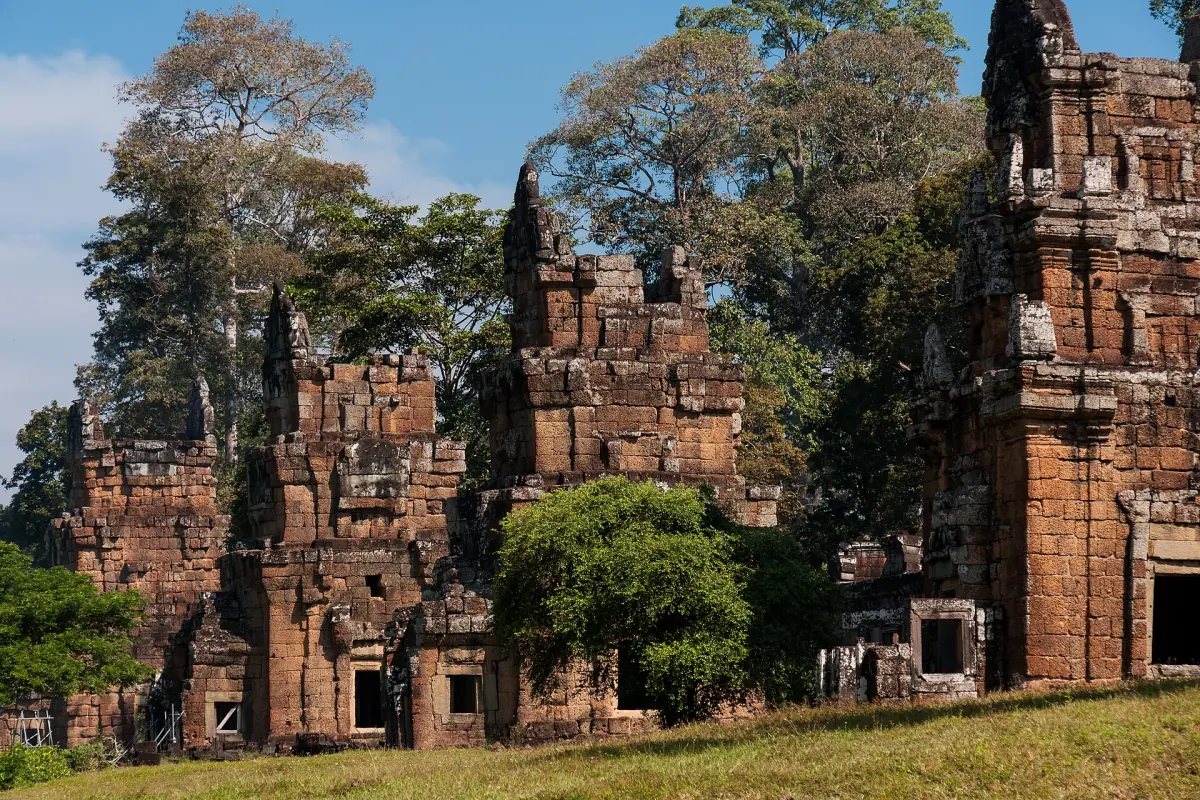
Prasat Suor Prat
Twelve towers, mostly laterite with sandstone parts, stand east of the terrace area. Their original name and exact building date are unknown. They are read as shrines for regional guardian deities or as a place of religious judgment. The tightrope-dancer story linked to the modern name is a later tale, not a known original use.
The North and South Kleang
The Kleangs sit behind the row of towers, opposite the Elephant Terrace. They are rectangular sandstone buildings, dated to the late 10th and early 11th century. The word often translated as "storehouse" does not prove what they were used for. They may have housed or received dignitaries. The South Kleang was left unfinished.
The twelve towers of Prasat Suor Prat stand together in a group and are worth a short walk from the terrace.
Visiting the terraces
What to plan around.
Hours and access
The park is open from 05:00 to 18:30, but not every part of the terraces is open for that whole window. Check on site which parts are open that day, and do not plan around entering the inner relief galleries.
Pass and tickets
There is no separate terrace ticket. Children under 12 enter free, and a 1-day pass has no photo, while 3- and 7-day passes do.
Dress and weather
Cover shoulders and knees. Wet stone is slippery, so wear shoes with grip, and during a storm stay away from large trees.
On foot
A walking route links the palace area, the two ponds and the two terraces with Preah Palilay and Tep Pranam. It is a simple way to combine the sights in one loop.
Next on your route
Everything here is within Angkor Thom.
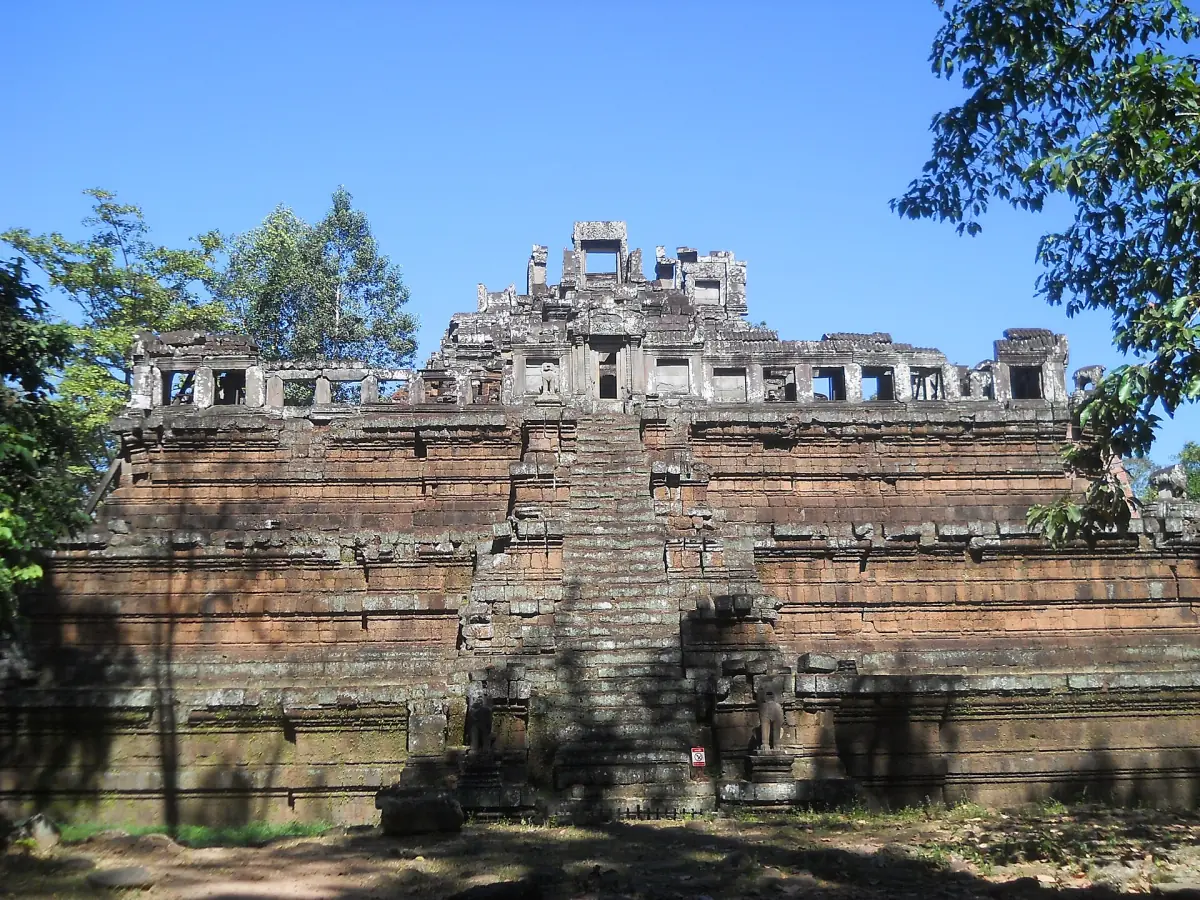
Phimeanakas and the palace enclosure
The stepped pyramid behind the terraces, with ponds and two small temples.
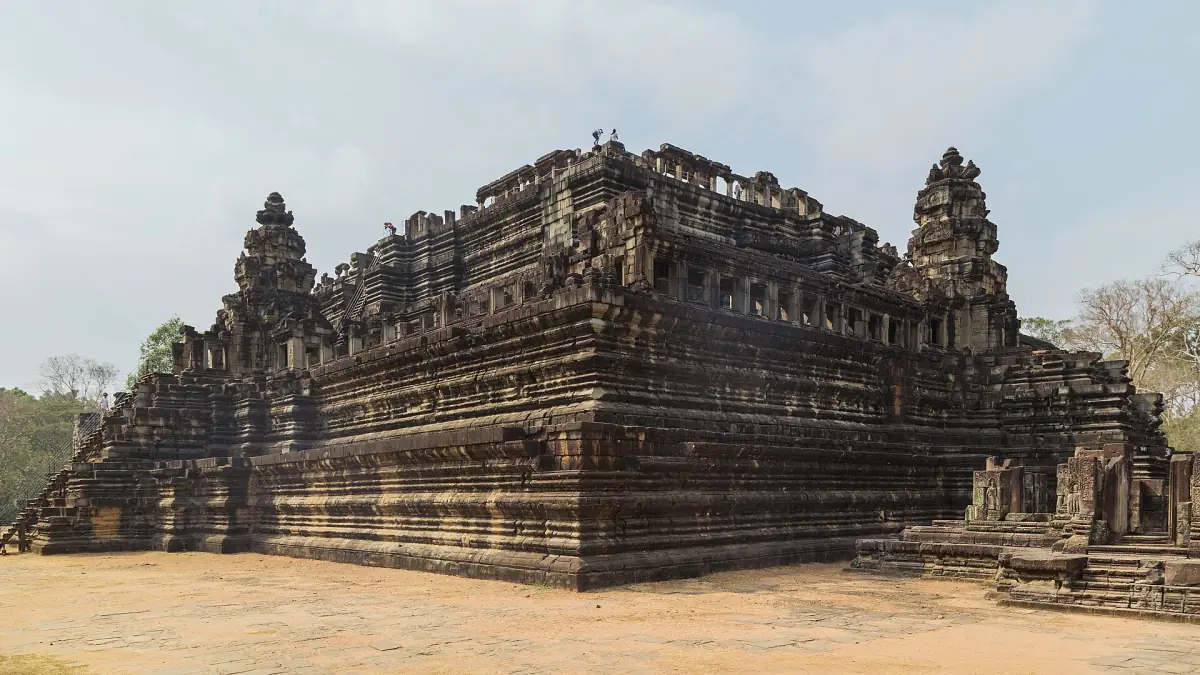
The Baphuon
The rebuilt temple mountain with the reclining Buddha.
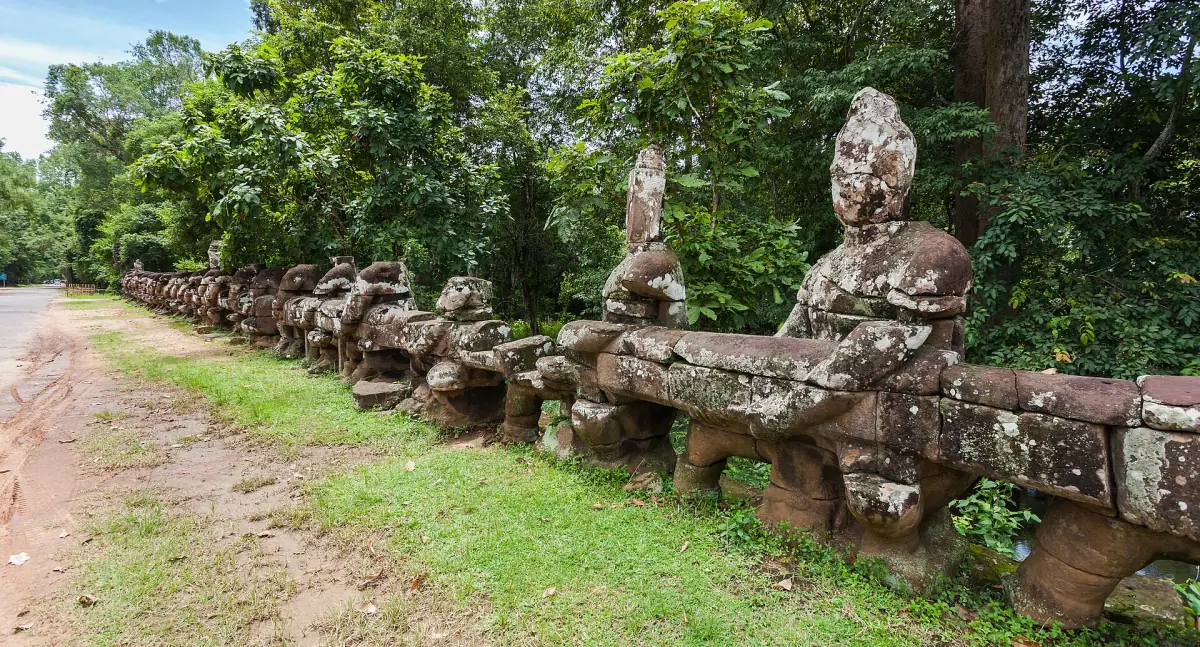
Churning of the Ocean of Milk
The stone figures along the causeways to the gates.
The nearby Bayon is covered at Bayon Temple, and the park as a whole at Angkor Park.
Elephant Terrace: frequently asked questions
How long is the Terrace of the Elephants?
It is roughly 300 to 350 m long.
Why is it called the Terrace of the Leper King?
The name is traditional. The statue on the terrace is a replica of a figure explained as Yama, the god of death and judge of souls. The original is in the National Museum in Phnom Penh. A leprosy diagnosis of a real king is not proven.
What is Prasat Suor Prat?
It is a row of 12 towers east of the terrace area, built mostly of laterite with sandstone elements. Their original function is read as shrines or as a place of religious judgment.
Do I need a separate ticket for the terraces?
No. The Angkor Pass covers Angkor Thom. It costs $37 for 1 day, $62 for 3 days within 7 days and $72 for 7 days within 30 days (2026).
Can I ride an elephant at the terrace?
No. Rides in the temple park were announced to end by early 2020. The elephants on the terrace are carved in stone.