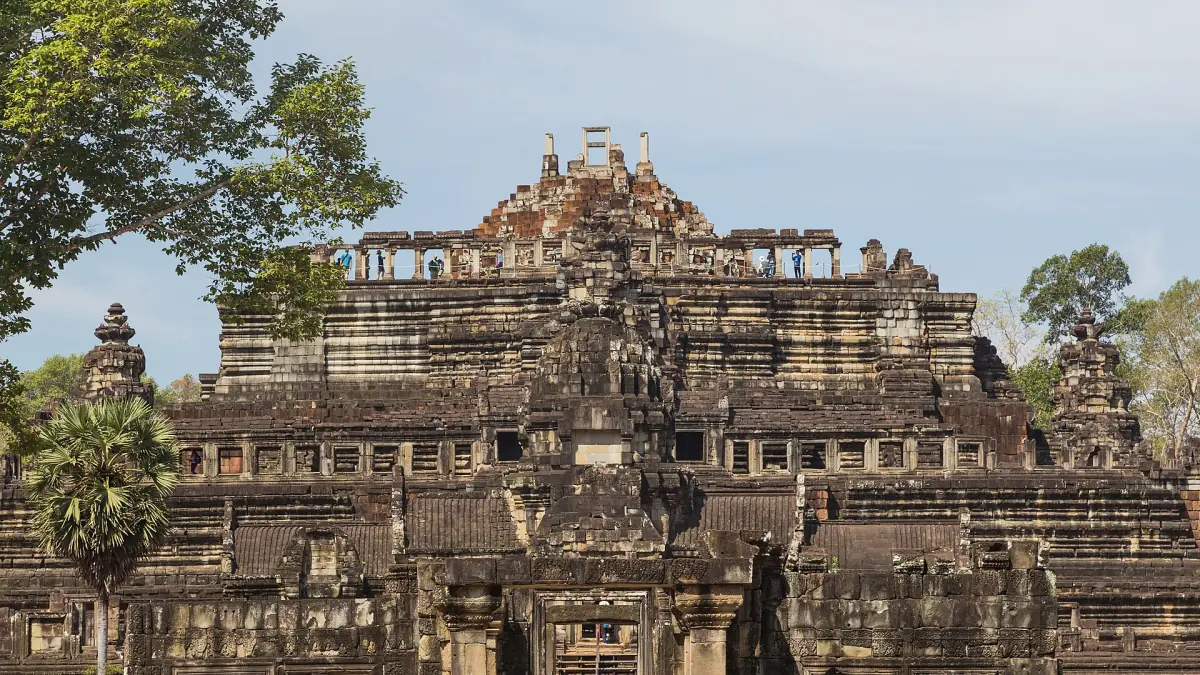
The Baphuon at a glance
The Baphuon is a three-tier temple mountain northwest of the Bayon, inside the walls of Angkor Thom. Udayadityavarman II built it as a state temple in the middle of the 11th century, and it was first dedicated to Shiva. That makes it older than the walled city itself, which Jayavarman VII laid out at the end of the 12th century.
Most visitors come for two things: the reclining Buddha on the west side and the story of how the whole pyramid was taken apart and rebuilt. You need the Angkor Pass to enter, and there is no separate Baphuon ticket. See the Angkor Pass prices and where to buy, or look at Angkor Thom tours by bike and tuk-tuk if you prefer a driver and a guide.
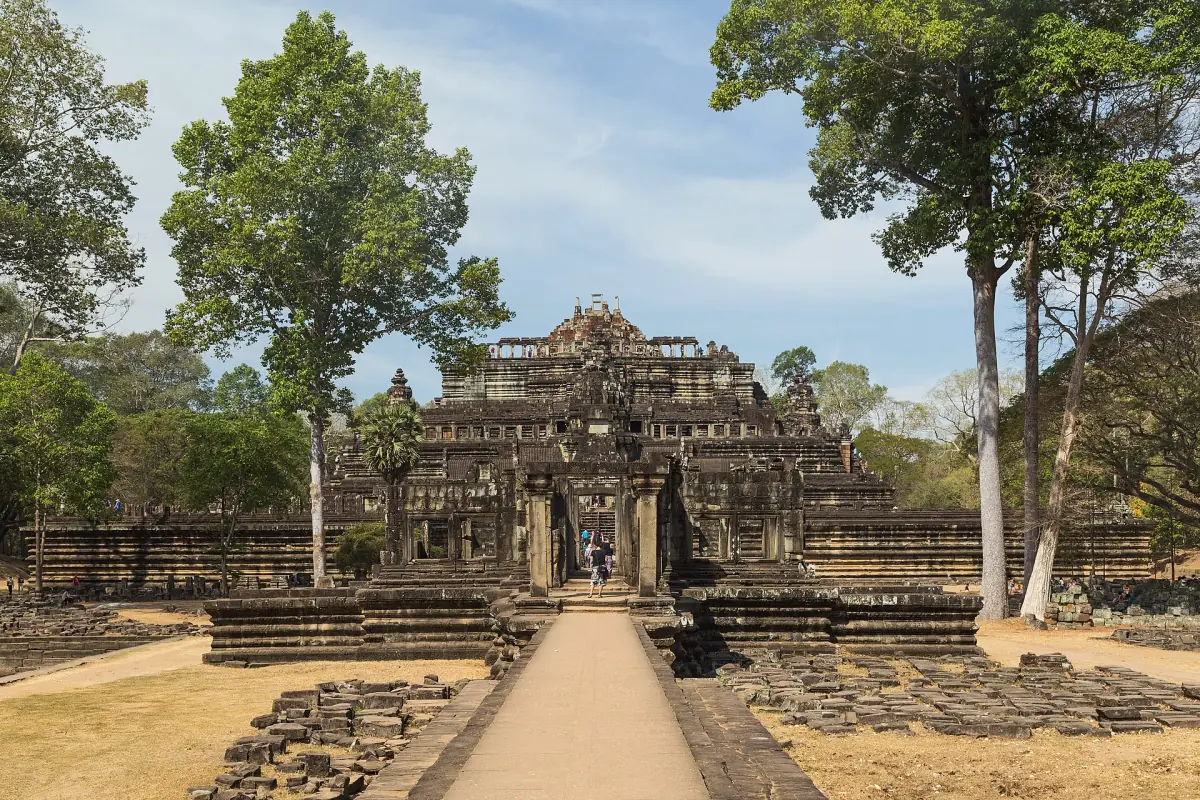
Our pick: a full day with the Baphuon
A guided day that passes the south gate to the Bayon and the Baphuon, then continues to the terraces and Ta Prohm.
Hand-picked tours, booked through GetYourGuide. Prices are indicative starting prices in US dollars (as of October 2026). Tap a tour for live availability and the current price in your currency.
Angkor Thom tours with the Baphuon
Guided temple tours around Angkor Thom, with live prices and availability.
The reclining Buddha of the Baphuon
A detail of the temple that is easy to misread.
The reclining Buddha lies on the west side, on the second level, and is 70 m long and 9 m high. It is not a fully free-standing figure that you can see from every direction, so do not expect a statue you can walk around.
The Buddha belongs to a later period. The temple began as a Shiva sanctuary and became Buddhist later. The Buddha and the conversion date from between the late 15th and the 16th century, so any single exact year is a guess.
| Detail | What to know |
|---|---|
| Builder | Udayadityavarman II, middle of the 11th century |
| First dedication | Shiva |
| Reclining Buddha | West side, second level, 70 m long, 9 m high |
| Buddhist conversion | Between the late 15th and the 16th century |
| Rebuilding | 1995 to 2011, inaugurated 3 July 2011 |
For most visitors, the Baphuon is a short stop of its own, best combined with the Phimeanakas and the terraces nearby. Pick it as a highlight if you like structure and construction, less if you only want carved faces. For those, the Bayon is the place.
How the Baphuon was rebuilt
Why the pyramid looks so clean today.
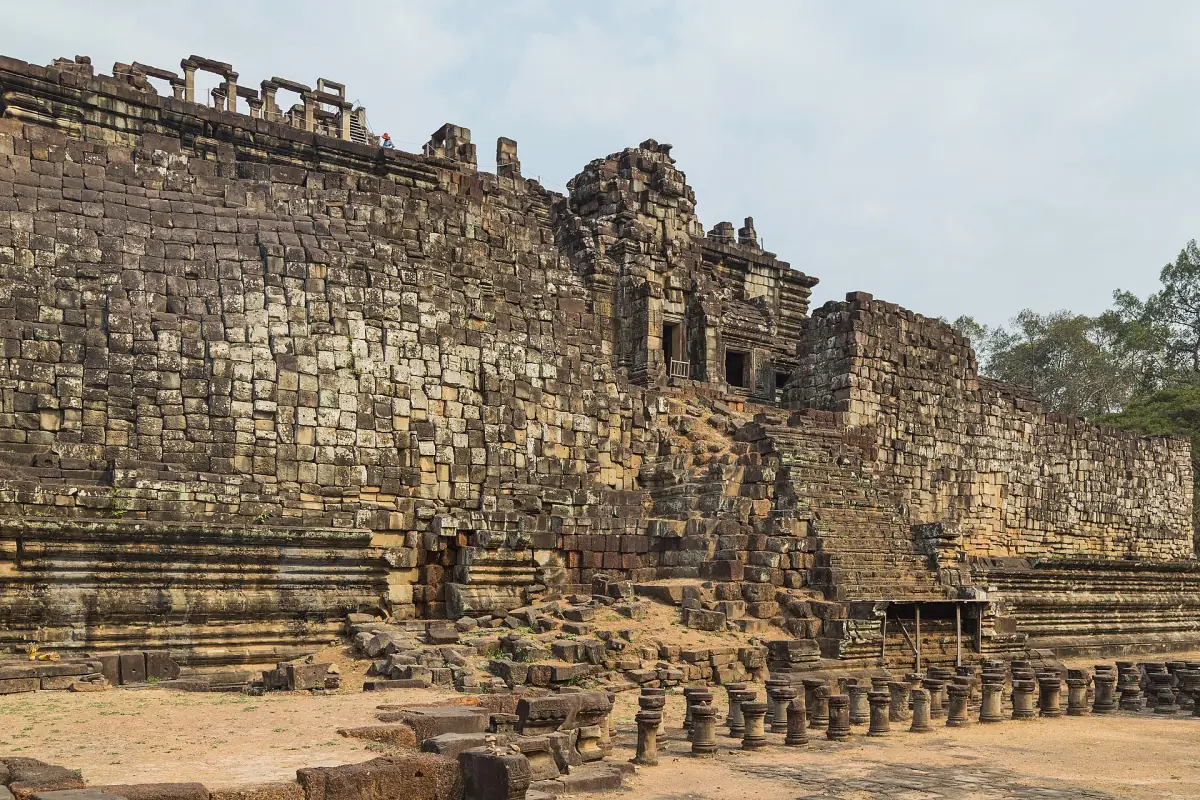
Bernard-Philippe Groslier began the method called anastylose, in which the original stones are put back in their place. War interrupted the work. The École française d'Extrême-Orient took it up again in 1995 and finished the project in 2011 under Pascal Royère. The temple was inaugurated on 3 July 2011.
That is why the walls look orderly rather than ruined. The stone is old, but the arrangement is the result of a very long puzzle.
The temple mountain rises in three tiers. During the rebuild the original sandstone blocks were put back where they belonged, so what you see is old stone in its old arrangement.
Visiting the Baphuon: hours, stairs and dress
Practical points for the day.
Hours
The Baphuon is open from 07:30 to 17:30. The park as a whole is open from 05:00 to 18:30, but that is not an opening time for each temple. Plan the Baphuon inside its own hours and check at the gate.
The climb
A safety rule for the summit excludes children under 12 and pregnant women. Do not plan around reaching the top on any particular day. Which levels are open can change, so check the signs and the staff on site.
Dress
Cover your shoulders and knees. This is the basic rule for temples in the park.
Rain and stone
Wet stone is slippery. Wear shoes with grip, and during a storm do not stand or park under large trees.
Time
Plan 2 to 3 hours for Angkor Thom as a whole. That covers the main sights, not every monument, so give the Baphuon its own slot if you want to see the Buddha and the walls.
Stay on the marked paths in the temple area. When you plan a longer day, the best time to visit Angkor Thom depends on the heat and the rainy season.
What to see near the Baphuon
The royal terraces and the palace are a short walk away.
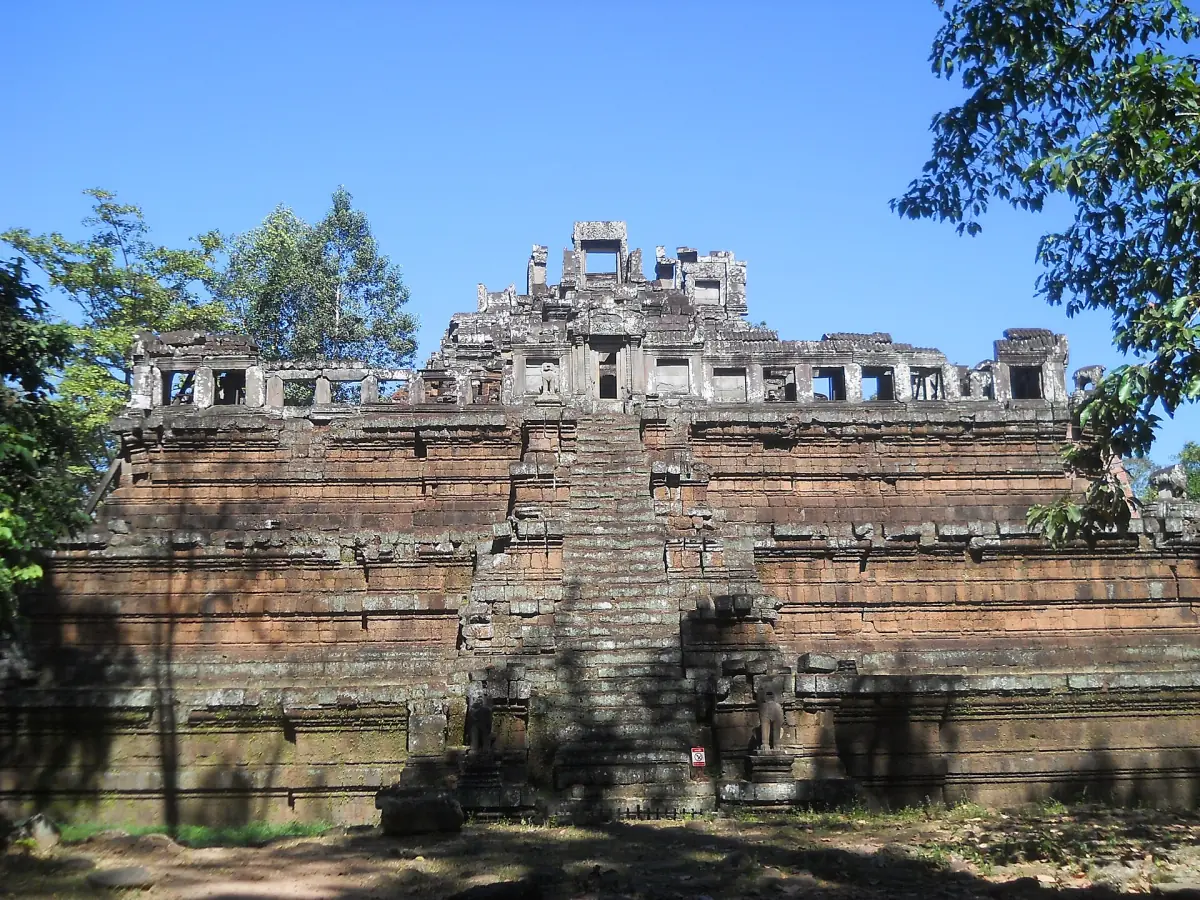
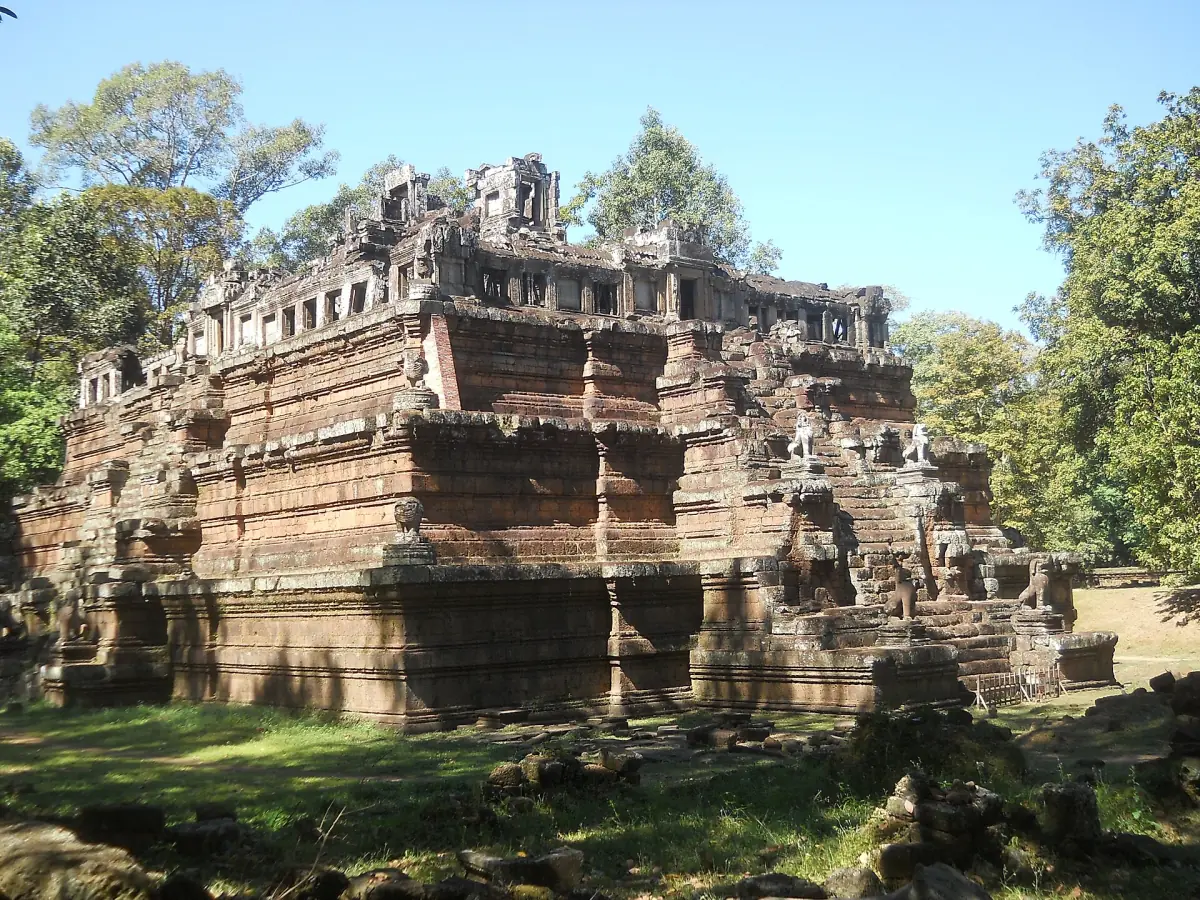
Phimeanakas and the palace enclosure
A stepped pyramid in the former royal palace area, with its ponds and two small temples.
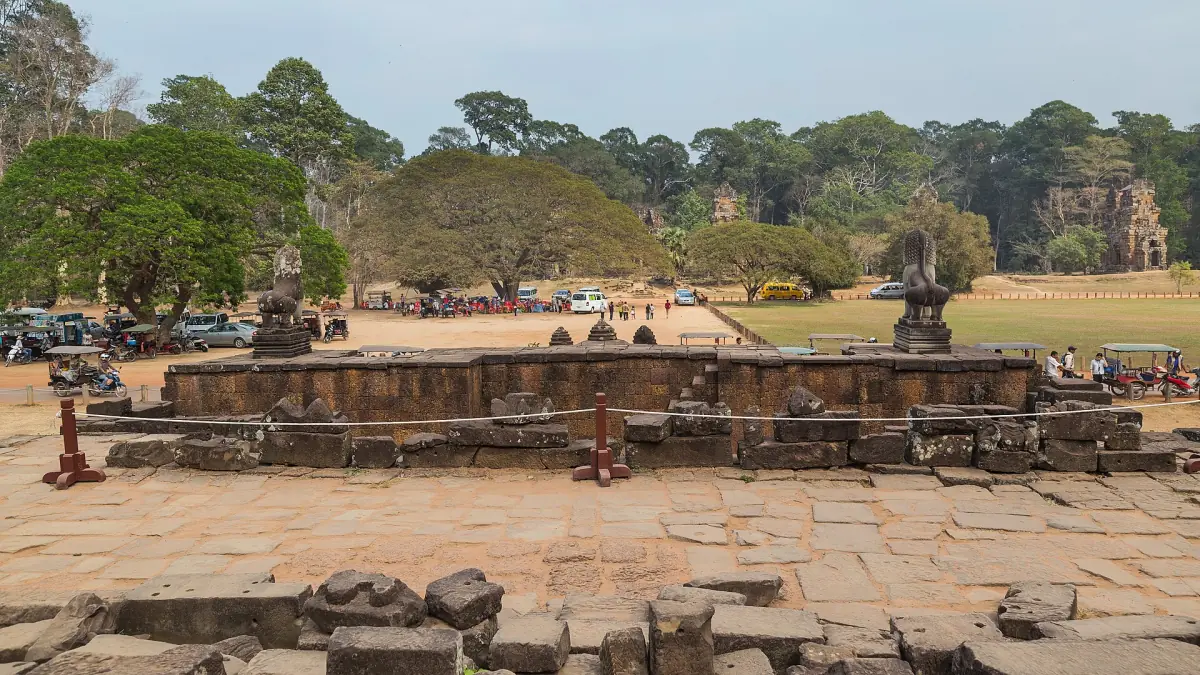
Terrace of the Elephants
The long wall of carved elephants and the Terrace of the Leper King.
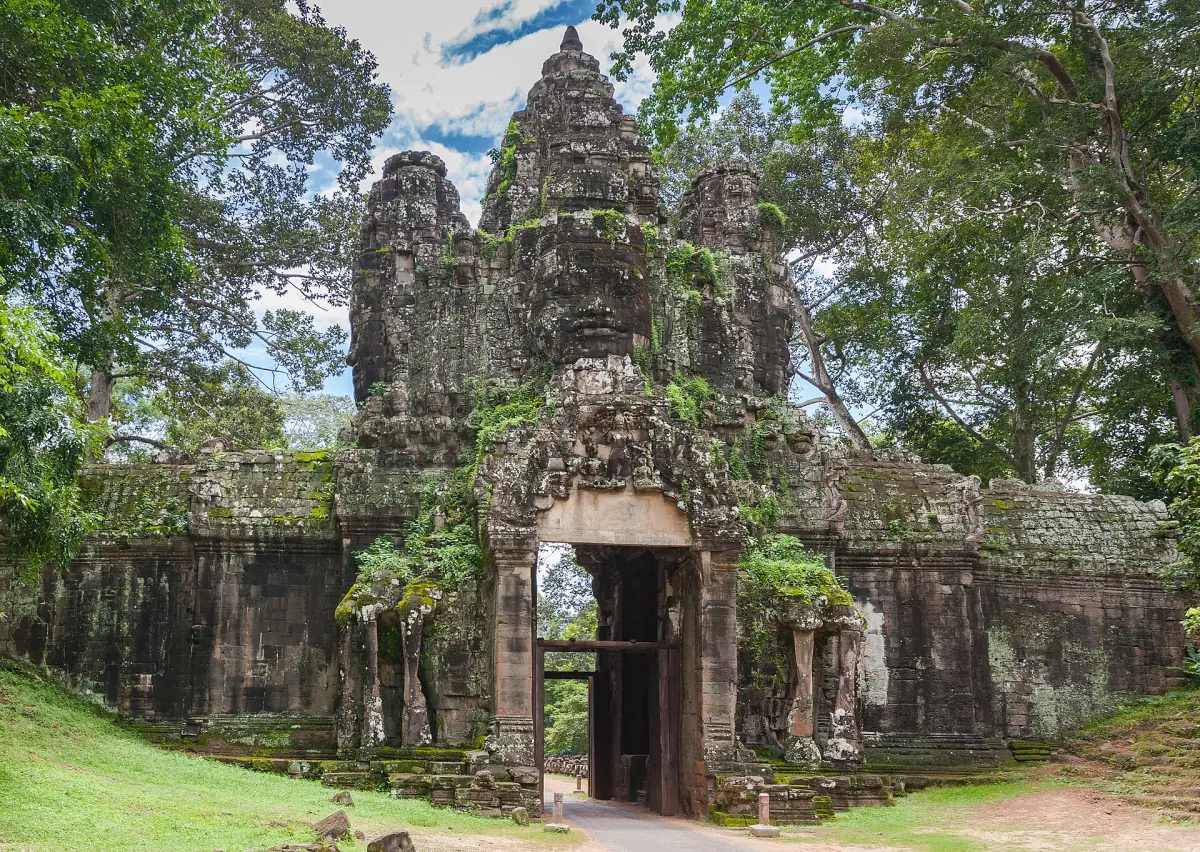
The five city gates
South Gate, Victory Gate and the others, with their stone guardians.
The Bayon, with its large stone faces, sits close by in the center of the city and has its own guide at Bayon Temple.
Baphuon: frequently asked questions
Do I need a separate ticket for the Baphuon?
No. The Angkor Pass covers the temples in the park, including Angkor Thom. It costs $37 for 1 day, $62 for 3 days within 7 days and $72 for 7 days within 30 days (2026). Children under 12 enter free.
Can I climb the Baphuon?
There is a safety rule that excludes children under 12 and pregnant women from the summit. Whether the upper levels are open on your day can change, so ask on site and do not plan the visit around the top.
How long is the reclining Buddha?
It is 70 m long and 9 m high. It lies on the west side, on the second level of the pyramid.
What are the Baphuon opening hours?
The Baphuon is open from 07:30 to 17:30. The park as a whole is open from 05:00 to 18:30, which is not the opening time of each temple.
How was the Baphuon rebuilt?
The École française d'Extrême-Orient took the temple apart and put the original stones back in their places between 1995 and 2011 under Pascal Royère. The temple was inaugurated on 3 July 2011.